Application drives the spec
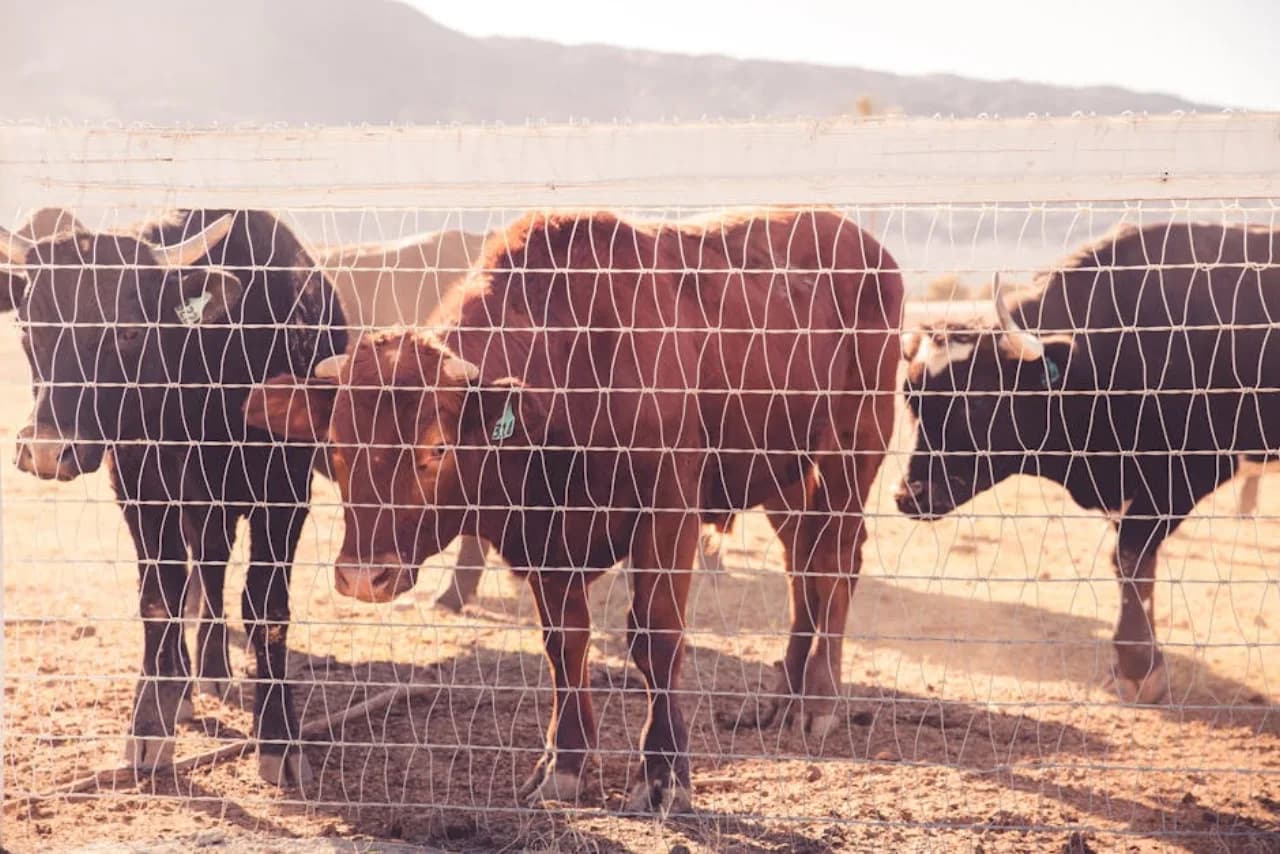
Cattle fence spec depends on application. Cow-calf operations on extensive range — 4-strand barbed wire on T-posts at 16′ centres is still the cost baseline; 6-strand high-tensile smooth wire energized to 4–6 J is the modern alternative with comparable hold-pressure at lower long-term cost. Feedlots with high cattle density and constant pen pressure — woven wire (page wire 1047-6-12.5 or similar) with steel pipe top rail at 4–6′ height; corner panels often combination woven-wire-plus-cable for impact tolerance. Dairy with twice-daily handling and tight lanes — pipe-rail or cable-rail with rubber-pad treadmill flooring at gates; less about containment and more about animal flow. Rotational pasture — permanent perimeter (woven wire or high-tensile) plus portable electric interior fence (poly-wire on reel-and-stake) for daily-move strip grazing.
Class 3 galvanizing is the agricultural standard
Class 3 galvanizing is the agricultural standard zinc spec — 0.80 oz/ft² minimum coating weight, roughly 3× residential Class 1. Service life 20+ years with ground-contact and livestock-rub conditions. Confirm with the mill-test certificate; cheap imported wire is often Class 1 sold as agricultural.
Post spacing and corner bracing
Post spacing: T-posts at 16′ centres for standard cattle, 12′ for high-pressure feedlot or sloped sites. Corner and end bracing critical — H-brace (two posts with a horizontal rail and diagonal tension wire) is the universal standard; deadman anchors (buried cross-tie) work in soft soil; cable bracing for high-tensile.
Volume freight economics
Volume economics: a full-truckload (typically 22 pallets) of woven wire ships at roughly 50% the freight rate per LF of an LTL pallet order. For a 5,000+ LF perimeter project, freight savings on a full-truckload order frequently cover 80–100% of the volume discount on the wire itself.
Frequently asked questions
Related guides
Chain-link Class 1 vs Class 2C galvanized: spec guide
Class 1 (1.2 oz/ft² zinc) vs Class 2C (2.0 oz/ft²) galvanized chain-link: 10-15 year vs 25-40 year service life, different rust-onset timelines, different commercial-spec requirements. Class 2C is the Canadian commercial standard; Class 1 is acceptable on residential perimeter only. Verify the coating class with mill-test certificate at delivery, especially on commercial-spec bids and pool-fence runs. Related: [chain-link fence overview](/fences/chain-link), [start a quote](/quote), [chain-link fence cost](/guides/chain-link-fence-cost).
→Fence cost in Canada 2026: per linear foot, every material
Canadian fence cost ranges $4.50/ft (farm woven-wire) to $240/ft (frameless glass pool), installed. Per-linear-foot pricing is more honest than per-panel because gates, end-posts, footings to frost depth, and existing-fence removal aren't panel-priced. Regional variation matters — Atlantic salt-spray, prairie frost, BC mild climate, and Quebec pool regulation all shift pricing. Related: [browse all fence categories](/fences), [start a quote](/quote), [more buying guides](/guides).
→Quebec 2025 pool fence regulation: compliance guide
Complete guide to Quebec's 2025 pool fence regulation: 1.2 m minimum height measured outside, self-closing self-latching gate, no climbable surface within 1 m, picket spacing ≤100 mm. Applies to every residential pool ≥60 cm depth. Compliance window is 60 days from installation. Frameless glass and aluminum picket are the compliant material defaults. Related: [pool fence regulations across Canada](/guides/pool-fence-regulations-canada), [start a quote](/quote), [browse pool fence](/fences/pool-glass).
→One quote. Every material. Every province.
Tell us material, project size, postal code, and contact — we come back within 24 hours with pricing, lead time, and a local install or delivery slot.