Atlantic
Salt-air corrosion: spec galvanized-after-weave or vinyl coat. Frost line 1.2m.
Fences · decorative
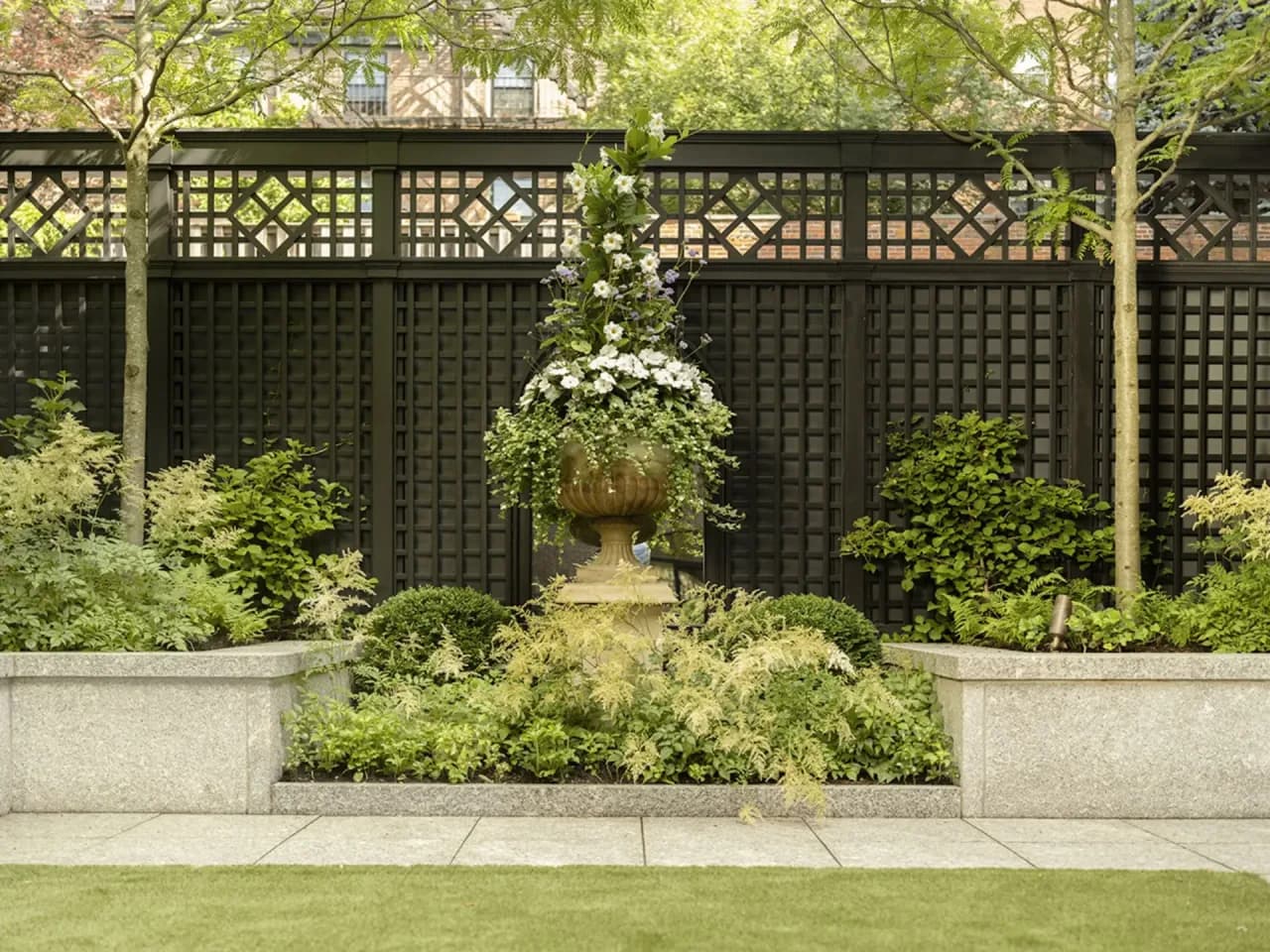
Decorative garden fence, raised-bed perimeters, wire trellis panels, lattice screens, rabbit & deer guards. Wood, vinyl, powder-coat steel.
Garden fence is the decorative-and-functional micro-perimeter. The 1′ to 4′ heights, the lightweight materials, the visual integration with planted beds — this category exists for the gardener whose fence is part of the garden, not a barrier surrounding it. Fenced.ca's garden range: decorative panels (cedar lattice, powder-coat steel arches, copper-tone wire mesh), raised-bed kits (perimeter rails sized to standard raised-bed dimensions), wire trellis panels (12-ga galvanized welded mesh on a steel frame — vines and runner beans grow up the mesh), lattice screens (privacy/decoration in 4′ × 8′ pre-built panels), and rabbit and deer guards (24″ height welded mesh skirt for vegetable garden perimeter against rabbits; 8′ deer fence for orchard and vegetable garden against deer).
Trellis specifically — the FR keyword "treillis" has 44K monthly volume in Quebec and is one of the top FR-market opportunities. The lattice-panel and wire-trellis substrates are the FR-buyer focus; cedar lattice with diagonal weave is the traditional Quebec garden material. Garden fence is supply-only for most products (DIY install dominates); the larger 8′ deer-fence applications can include installation as needed.
Decorative options: Trellis panels (cedar lattice) for climbing plants. Wattle hurdles (woven willow) for English-cottage look. Wrought-iron mini-fence (300 mm tall) as decorative border. Picket sections (600 mm) for vegetable plot perimeters.
Deer exclusion: 2.4 m mesh fencing (deer can clear lower fences) with 70 mm × 100 mm openings to block fawns. Slanted fencing (45° outward lean) at 1.5 m visually deters deer with depth-perception confusion. Critical for orchards and ornamental gardens near forested suburbs.
Raised bed enclosures: Cedar 4×4 corners with 2×6 horizontals forming a fenced raised bed. Often paired with welded-wire animal guards on the lower 600 mm to keep rabbits, groundhogs, and small dogs out of vegetable patches.
Pricing & lead time: Garden fence pricing: cedar trellis panel 1.8 m at $80–150 each, wattle hurdle 1.2 m at $60–110 each, wrought-iron decorative border at $15–30 LF, deer-exclusion 2.4 m at $15–25 LF. Quick shipping on standard items; custom trellis takes 2–3 weeks.
How garden fence & trellis stacks up against the alternatives — at a residential height of six feet, in median Canadian markets.
Stake the line, check setback rules with the municipality, locate utilities (Info-Excavation in QC, Ontario One Call elsewhere).
End, corner, and gate posts. Concrete footings to frost depth — 1.2m in most of the country, 1.8m in northern Alberta and the territories.
Spaced 10' on centre. Plumb each one before the concrete sets.
1⅝” galvanized pipe, slipped through line-post loop caps.
Tension along the top rail with a come-along, hog-ring to the rail every 24”. Tie wire every line post.
Bottom tension wire, gate hinges, latch hardware. Cap exposed wire ends.
Salt-air corrosion: spec galvanized-after-weave or vinyl coat. Frost line 1.2m.
Permis obligatoire in most municipalities. Bilingual quote PDFs standard.
OBC §9.10 for pool perimeters. Conservation Authority rules along the moraine.
Frost line 1.4–1.5m. Wind-rated panels for the shelterbelt swap-outs.
Coastal: vinyl coat. North: 1.8m frost, schedule-40 pipe for snow load.
Best fence for a backyard garden depends on what you're protecting against. Visual screening and rabbit/raccoon deterrent — cedar picket at 4 ft, or vinyl picket if you want zero maintenance, $25-50 per linear foot supply. Deer pressure — minimum 7 ft tall, ideally 8 ft, woven wire or polypropylene deer mesh on T-posts; under 7 ft and deer just jump it. Small wildlife (rabbits, groundhogs) — 3-4 ft tall welded wire or chicken-wire with a 12-inch bottom apron buried outward, $5-12 per foot supply. Pure decorative — wrought-iron or aluminum picket, see-through but defines the garden edge, $35-70 per foot supply. The most common mistake is buying a 4-foot fence and discovering deer or large dogs ignore it. Diagnose the threat first, then pick the fence — going too low or too open wastes the install.
Cheapest backyard fence by supply cost: 1) Welded-wire utility mesh (sometimes sold as "garden fence") on driven steel T-posts — $4-10 per linear foot supply, install in a weekend, lasts 8-15 years. 2) Galvanized chain-link 4-ft residential — $12-20 per linear foot supply, lasts 15-25 years, the most common cheap fence in Canada. 3) Cedar split-rail 2- or 3-rail — $15-25 per linear foot, looks better than wire, marginal containment value. 4) Pressure-treated wood picket — $20-30 per linear foot, solid look, decent maintenance interval. For pure containment-of-pets or rough boundary marking, welded-wire wins on cost. For a fence you'll look at every day, picket or chain-link with privacy slats give more value per dollar. Skip plastic snow-fence as a permanent option — it sun-bleaches and tears in one season.
Cheapest vegetable garden fence: 4-foot welded-wire utility mesh (2x4 inch grid) on 6-foot driven steel T-posts, with a 12-inch apron of the same mesh laid flat outward at grade and pinned with landscape staples. Materials for 100 linear feet: $80-150 for 100 ft of welded wire roll, $100-180 for 10-12 T-posts, $30 for staples and ties, $40 rental for a T-post driver. Total $250-400 supply for 100 ft, install in 4-6 hours one person. The apron is the critical detail — it stops rabbits, groundhogs, and skunks from digging under. Add a single strand of electric wire at the top 6 inches if you have raccoon or deer pressure. For deer-only pressure, upgrade to 7-foot poly deer mesh on the same T-post spacing at $0.50-1.20 per foot supply. Skip ornamental fence on a budget vegetable plot — it's 5-10× the cost.
The dominant fence colour trend in Canada in 2026 is matte black — black aluminum picket, black powder-coated chain-link, black-stained cedar board, black vinyl. It reads architectural, hides road grime in winter, and pairs with both modern and traditional houses. Second trend is warm natural cedar tones (clear stains on cedar, cedar-toned vinyl printed grain) — a reaction to the all-grey decade. Third is bronze and dark green, especially on aluminum estate fence and security palisade where pure black feels too stark. Out of favour: bright white vinyl (looks dated), unfinished pressure-treated wood (turns grey in 2 years), and ranch-tan stains. For pool enclosure code compliance the colour doesn't matter — only height and gap spacing. For HOAs and condo boards check covenants before committing — some still require white or natural finishes.
Garden boundary alternatives to a fence: 1) Hedge — cedar (Thuja occidentalis) in zones 3-7, yew (Taxus) in zones 5+, privet in zones 5+; gives 6-foot screen in 3-5 years, no maintenance after establishment except an annual trim. 2) Mixed shrub border — dogwoods, ninebark, viburnum, serviceberry — naturalistic, supports pollinators, 4-foot screening in 2-3 years. 3) Trellis with climbers — cedar lattice or steel tension cable + clematis, climbing hydrangea, or Virginia creeper; full screen in 3 years. 4) Raised planter wall — 24-36 inch cedar or steel planter, defines boundary without enclosing. 5) Stone or timber bollards with gravel path — defines edge without screening. 6) Landform — a low berm planted with grasses. The fence still wins when you need pet containment, security, or pool code compliance.
Cheapest DIY fence: 4-foot welded-wire utility mesh on driven steel T-posts. Materials for 100 linear feet: roll of 4x4 welded wire $80-150, 10-12 T-posts at $8-12 each, T-post driver rental $40 day, wire ties $10. Total: $250-400 supply, install in 4-6 hours one person. Next step up: 4-ft galvanized chain-link DIY kit (roll of mesh, top rail, line posts, tension wire, fittings) at $400-700 for 100 ft, install in a long weekend two people. Cheaper than both for pure visual marking: cedar split-rail 2-rail, $5-10 per foot supply if you buy raw rails from a local mill. The traps to avoid: orange plastic snow fence (1-season), chicken wire on garden stakes (deer and dogs ignore it), and "no-dig" kits sold at big-box stores — those work on flat lawn for a few weeks then lean.
Ready to spec it?