Atlantic
Salt-air corrosion: spec galvanized-after-weave or vinyl coat. Frost line 1.2m.
Fences · temporary
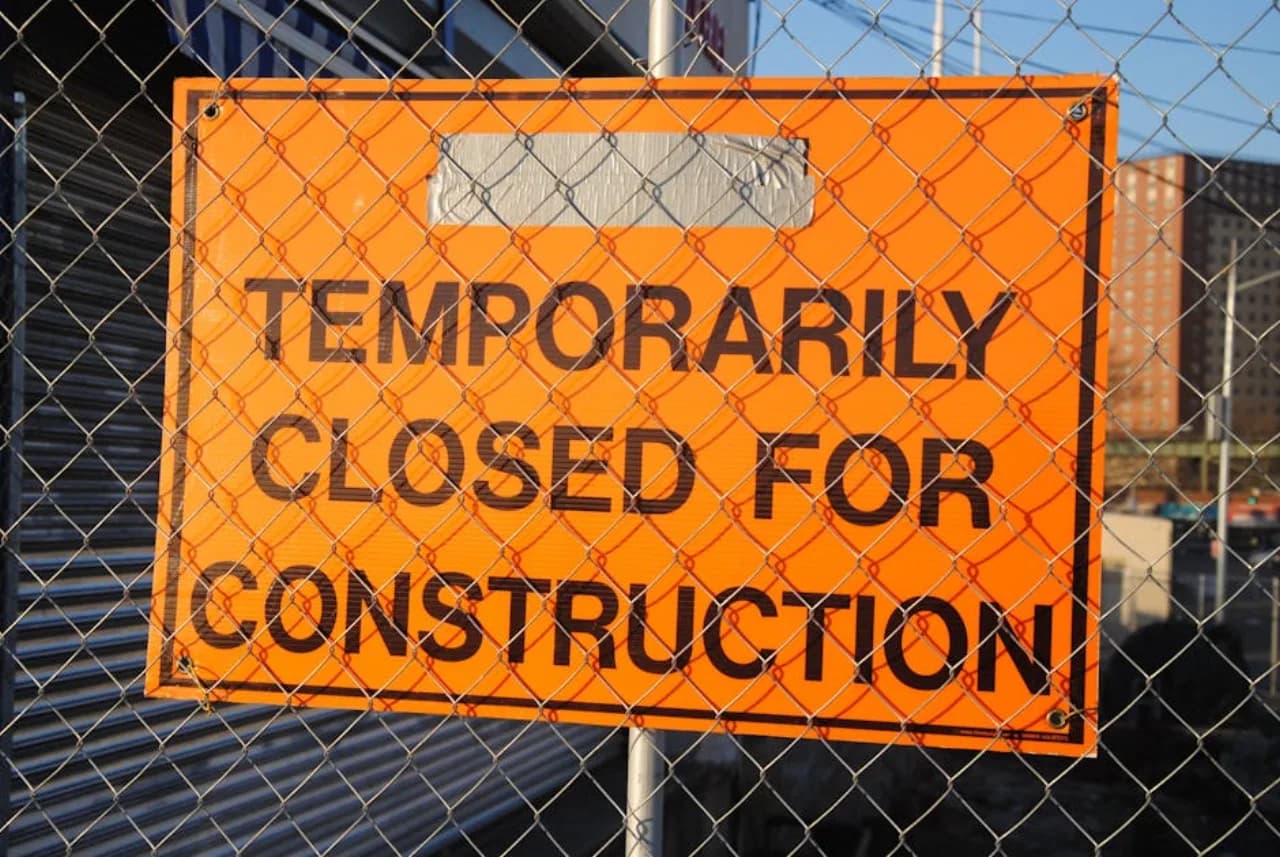
Free-standing chain-link panels with concrete blocks, mesh hoarding, crowd-control barricades. 6' or 8' height. Buy or rent — 1-week / 1-month / 3+ month tiers.
Temporary fence is both the highest-velocity product in our catalog and the only category where rental rivals supply for revenue. The construction industry, event operations, public-realm hoarding, and emergency damage perimeters all consume temporary fence on a project basis — measured in weeks or months, not the 20–30 year service life of permanent perimeter. Fenced.ca operates a dedicated rental division with these substrates: chain-link panels (6′ × 10′ or 6′ × 12′ in 1-3/8″ frame with chain-link mesh, on concrete-block feet), mesh hoarding panels (6′ or 8′ × 8′ wide solid panels with black mesh scrim, for retail-storefront protection and urban hoarding), and crowd-control barricades (3′ × 8′ welded steel panels with feet, the festival-perimeter standard).
Rental economics: weekly tier suits short-duration events and emergency perimeters; monthly tier suits construction sites and seasonal applications; 3+ month tier (with significant volume discount) suits major capital projects. Delivery and pickup are scheduled from any of our our Canada-wide network; trucks haul 50 to 80 panels per load. B2B NET-30 accounts are standard for general contractors and event-operations companies — application requires WSIB/CNESST/WorkSafe clearance and 12 months of trade-supplier statements.
Purchase: same panels also available for purchase for ongoing construction-ops, fleet rental subsidiaries, and field-operations companies who consume enough panels annually that owning beats renting.
Rental tiers: 1 week or less (events, short retail hoarding), 1 month (standard construction sites), 3+ months (capital projects, multi-phase developments). Volume discounts apply at the 3-month tier and on multi-site rentals.
Panel types: Chain-link on portable base (most common — 2.0 m × 3.5 m panels, 30 kg each, 2-person carry). Plywood-hoarding (event privacy + advertising surface). Mesh windscreen (high-wind sites). Crowd-control barricades (steel-framed, interlocking) for events and concerts.
Site logistics: Delivery within 48–72 hours to major Canadian cities. Bases are concrete blocks or water-fillable plastic depending on local wind code and seasonal weather. Setup crew available for 30+ panel orders; smaller orders self-install in <1 hour.
Pricing & lead time: Temporary fence pricing — rental: $15–25 per panel per month (1-week minimum, $40 single-week), $10–15 per panel month at 3+ month tier. Purchase: $120–180 per panel new, $60–100 used. Delivery within 48 hours to major Canadian cities; setup crew available for orders 30+ panels.
How temporary fence stacks up against the alternatives — at a residential height of six feet, in median Canadian markets.
Stake the line, check setback rules with the municipality, locate utilities (Info-Excavation in QC, Ontario One Call elsewhere).
End, corner, and gate posts. Concrete footings to frost depth — 1.2m in most of the country, 1.8m in northern Alberta and the territories.
Spaced 10' on centre. Plumb each one before the concrete sets.
1⅝” galvanized pipe, slipped through line-post loop caps.
Tension along the top rail with a come-along, hog-ring to the rail every 24”. Tie wire every line post.
Bottom tension wire, gate hinges, latch hardware. Cap exposed wire ends.
Salt-air corrosion: spec galvanized-after-weave or vinyl coat. Frost line 1.2m.
Permis obligatoire in most municipalities. Bilingual quote PDFs standard.
OBC §9.10 for pool perimeters. Conservation Authority rules along the moraine.
Frost line 1.4–1.5m. Wind-rated panels for the shelterbelt swap-outs.
Coastal: vinyl coat. North: 1.8m frost, schedule-40 pipe for snow load.
Panels, rolls, pallets. Temporary Fence shipped to every Canadian postal code, with itemized 24-hour quotes.
Daily, weekly, multi-month tiers for temporary deployments. 48-72 hour delivery in major metros.
Regional installer network, frost-line and climate-spec engineered. Permits and inspection coordinated.
Best temporary fence for a construction site in Canada: 6-ft chain-link panels on free-standing concrete or polyethylene feet (sometimes called "Mojo" or "Panel" systems). Each panel is 6 ft tall × 10 ft wide, weighs 60-80 lbs, and clamps to the next with steel couplers; feet weigh 30-100 lbs and resist wind without anchoring. For higher-security sites use 8-ft panels with anti-climb sheeting or full-perimeter shrink-wrap. For pedestrian work zones (sidewalks, retail, events) 6-ft pedestrian-grade panels with castors or shorter heights (typically 4 ft) are easier to reposition. For very short-term events or non-public sites, plastic orange snow-fence on T-posts works but provides no security. Add gates at vehicle access (typically 12-ft vehicle gate, 4-ft pedestrian gate), and consider privacy mesh windscreen on perimeter facing public roads. Rental terms are usually weekly with delivery and pickup; Fenced.ca rents panels nationally with 48-72 hour metro delivery.
Privacy without a fence — practical approaches: 1) Hedge planting — cedar (Thuja occidentalis) or columnar Serbian spruce planted 60 cm off the property line gives 1.8-2.4 m screening in 4-6 years, no maintenance after establishment except annual trim. 2) Mixed shrub border — dogwoods, ninebark, viburnum, serviceberry — supports pollinators, 1.2 m screen in 2-3 years. 3) Trellis with climbers — cedar or steel cable trellis with clematis, climbing hydrangea, Virginia creeper, or grape; full screen in 3 years, looks intentional. 4) Strategic tree placement — Japanese tree lilac, columnar oaks, or layered conifers near patio sightlines. 5) Pergola or shade structure with louvred sides over the seating area you want to screen. 6) Living roof or green wall — apartments and commercial use modular green wall panels. For pure privacy with no fence, hedge + strategic plantings is the most reliable; for instant privacy you need temporary panels or screens.
Temporary fence options for short-term home or event use: 1) Chain-link panels on free-standing feet — same product as construction sites, rentable by the week, 6 ft tall, secure. 2) Crowd-control barricades (interlocking steel) — 1 m tall, 2-2.5 m wide, used for events, lines, and pedestrian channels. 3) Plastic orange snow fence on T-posts — cheapest option, 1 m tall, visual barrier only, $40-100 for 30 m. 4) Hardware mesh / chicken wire on driven garden stakes — DIY temporary garden enclosure. 5) Bunting, stanchion-and-rope, or retractable belt barriers — indoor or front-of-house event boundary. 6) Snow-fence-style mesh on T-posts — better-looking than orange plastic and stronger; black or green polypropylene. 7) Pop-up event panels with branded fabric covers. Choose by: security level needed, duration, public/private setting, and whether the fence will need to be moved during use.
Yard boundary alternatives to a fence: 1) Hedge — cedar, yew, or boxwood for formal, ninebark or dogwood for naturalistic; full screen in 3-6 years. 2) Mixed planting border with layered heights — small trees, shrubs, perennials — defines boundary as a planted edge instead of a hard line. 3) Stone or timber retaining wall — works on sloped lots, defines boundary plus changes grade. 4) Raised planter wall — 60-90 cm cedar or steel planter at the boundary line, defines without enclosing. 5) Bollard line — wooden, steel, or stone posts at intervals, no panels between, used for visual cue on rural and lake lots. 6) Gravel or stone path along the boundary — defines edge without enclosure. 7) Landform — low berm, planted with grasses or shrubs. Fence still wins when you need pet containment, security, pool code compliance, or rapid screening; alternatives win on lower maintenance, natural look, and softer property-line transitions.
In Canadian construction documents and municipal bylaws, a construction site fence is referred to as: "construction hoarding" (most common in Ontario building permit and bylaw language, refers to solid hoarding boards along sidewalks for tall building work), "temporary construction fencing" or "site fencing" (generic spec-sheet term covering chain-link panels, crowd-control barricades, and plywood hoarding), "perimeter site fencing" (project management term in CCDC contracts), or "clôture de chantier" in French Quebec contracts. The bright orange plastic mesh on driven stakes is technically "safety fence" or "snow fence" (it's the same product) when used as a visual barrier; for actual site security and code compliance you need chain-link panels or hoarding. Municipal bylaws often distinguish between "hoarding" (solid sheeting over 1.8 m around demolition or excavation, often required by OBC / NBC) and "site fencing" (any perimeter barrier).
The four functional types of fence: 1) Boundary / privacy fence — defines property line and blocks sightlines; materials: wood board, vinyl, composite, aluminum picket, masonry. 2) Security fence — keeps people or vehicles out (or in); materials: chain-link with barbed-wire top, palisade steel, anti-climb mesh, expanded metal, concrete. 3) Containment fence — keeps animals in or out (pets, livestock, wildlife); materials: chain-link, welded wire, woven page wire, high-tensile electric, invisible electronic. 4) Decorative / ornamental fence — defines edge without screening, primarily aesthetic; materials: split-rail, picket, ornamental aluminum, wrought-iron, low garden border. Functional categories overlap: a 6-ft aluminum picket can serve as boundary and pool-code-compliant containment; a wood board fence covers boundary, privacy, and pet containment. Most residential projects need to satisfy 2-3 categories at once; specifying by category first and material second avoids the common mistake of picking the wrong material for the actual job.
Ready to spec it?